
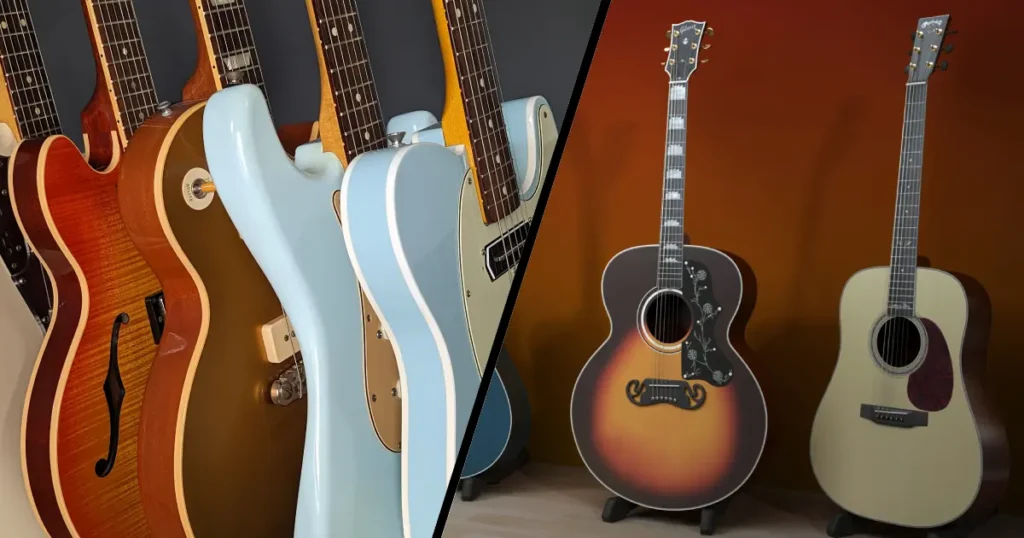
"I've been learning on an acoustic guitar. Should I try electric instead?"
It's one of the most common questions I get from adult students in my studio, and the short answer is simple: yes, if it makes you excited to pick up the instrument. The longer answer depends on your musical goals, your lifestyle, and how your hands are feeling.
The biggest myth in guitar learning is that you have to "earn" the right to play electric by starting on acoustic. In reality, both instruments have real strengths and trade-offs. The best guitar for you isn't the one internet forums insist on — it's the one that keeps you picking it up every day.
Let's break down the honest pros and cons of both, so you can decide if switching is right for your guitar journey.
The Acoustic Guitar: Simple, Raw, and (sometimes) Demanding
If you're currently learning on acoustic, you already know its biggest strength: simplicity.
- Zero setup friction. No cables, amps, or power outlets — just pick it up and play for five minutes whenever you've got a spare moment.
- Rapid finger endurance. Thicker steel strings and higher tension build hand strength and calluses fast.
- Pure, organic tone. For folk, country, or singer-songwriter music, nothing replaces the natural resonance of a hollow wooden body.
- Physical pain barrier. Thicker strings need more finger pressure. For adult beginners with any joint stiffness, hand fatigue can shorten your practice sessions.
- No volume control. You can't plug in headphones — if late-night quiet is your only window to practice, an acoustic can be surprisingly loud.
The Electric Guitar: Comfortable, Quiet, and Versatile
Switching to electric isn't a retreat — it's simply choosing a different tool for the job.
- Physical comfort. Lighter strings and lower action mean fretting a chord takes roughly half the hand pressure.
- Silent practice options. A mini-amp or headphone adapter lets you practise at 11pm without waking the house.
- Instant sonic motivation. A touch of reverb or overdrive makes a simple two-chord progression sound massive — a real psychological boost for adult learners.
- Gear friction. You need an amp, a cable, and power to hear it properly — that extra step can deter a quick, spontaneous practice session.
- Unforgiving pickups. Electric pickups catch every sound, so sloppy finger placement gets amplified — you'll need to learn string-muting technique earlier.
How to Decide: The 3-Question Framework
Ask yourself these three questions to work out whether adding or switching to electric makes sense for you.
What music do you actually listen to? A playlist full of rock, blues, pop, metal, or indie will sound far more authentic on electric. Love fingerstyle, bluegrass, or acoustic pop? Stick with acoustic.
When do you practice? If your only free time is late at night after work or once the kids are asleep, an electric with headphones will double your available practice hours.
Is physical pain stopping your progress? If sore fingertips or hand fatigue are making you avoid practising altogether, switching to electric can save your momentum.
The best part? Every skill transfers. Chord shapes, scale patterns, rhythm timing, and hand-eye coordination are identical on both instruments. Many of my students find that a few weeks on electric builds finger dexterity that makes returning to acoustic even easier.
The goal was never to master one instrument type — it's to build a lifelong habit of making music.
Ready to Take the Next Step?
Whether you're stuck on a tricky chord change or figuring out your first electric setup, you don't have to guess your way through it.
Book a Lesson With Me