
The Great Capo Debate
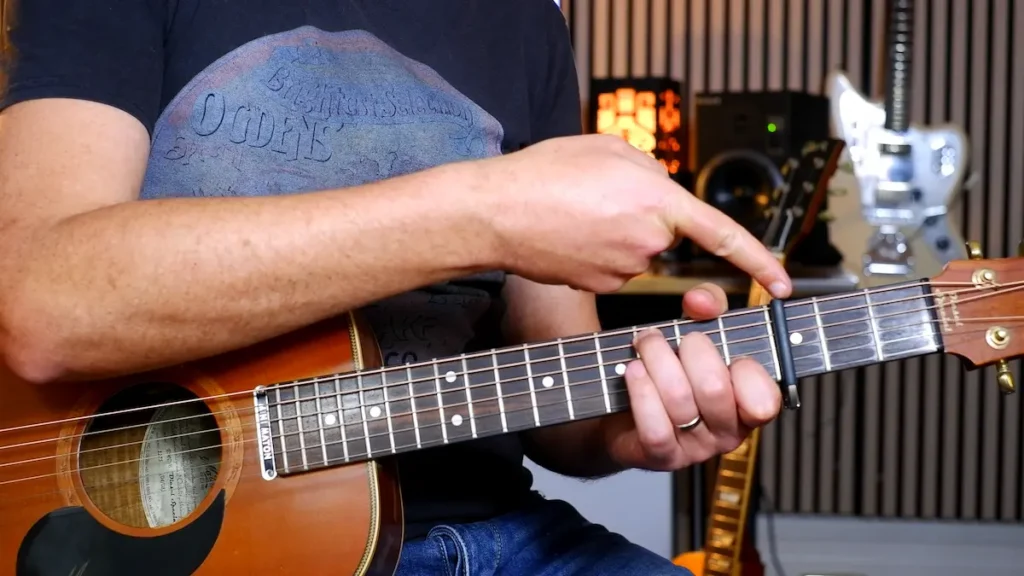
Are you applying your capo from above the neck on the bass side, or from below on the treble side? Legendary guitarists are split right down the middle on this technique. Keith Richards prefers applying his capo from the bass side, while Eric Clapton enters from the treble side. In my video on proper guitar capo placement, I dive deep into this debate to show how subtle adjustments keep your instrument sounding pitch perfect. Both methods work well, but your technique determines whether your strings stay in tune. Proper guitar capo placement is essential for clean chords, accurate pitch, and effortless playing across the entire fretboard.
Bass Side vs Treble Side: Does It Matter?
The direction does not strictly matter, because personal comfort plays a massive role in performance. Coming from the bass side gives your thumb clear access to the top of the neck, which many players find natural. Coming from the treble side leaves the top of the neck open, which can benefit players with larger hands or unique thumb positions. However, applying a capo carelessly from either side causes strings to stretch sideways, which bends your notes out of tune. Your main goal is to achieve equal pressure across all six strings without pulling them off alignment.
Three Rules for Proper Guitar Capo Placement
- Position close to the fret: Place the rubber pad directly behind the fretwire, which minimises buzzing while keeping the pitch accurate. Placing it too far back forces you to apply excessive clamping pressure, which causes fret buzz and tuning drift.
- Keep the clamp straight: Align the capo parallel to the fret, so you avoid dragging strings out of alignment. A crooked clamp pulls the outer strings sideways, which throws off your pitch instantly.
- Control your clamping pressure: Apply just enough tension to achieve a clear sound, because extra pressure forces notes sharp. Adjustable spring or screw capos make this process much easier to manage.
Choosing the Right Capo Style
- Spring action capos: These quick release models are fast to clamp on and remove during live gigs, but they apply a fixed pressure that may pull lighter strings sharp.
- Screw adjustable capos: These allow precise control over clamping force, which helps maintain perfect tuning across different neck profiles.
- Partial capos: These clamp down on specific strings only, which opens up creative open tuning sounds without retuning your entire instrument.
Matching Your Capo to Your Fretboard
Your fretboard shape influences how well your clamp performs. Flat fretboards, which are common on classical nylon string guitars, require a completely straight rubber bar. Curved fretboards, which are standard on acoustic and electric guitars, need a subtle arch to match the fingerboard radius. Using an incorrect shape forces the centre strings to buzz while bending the outer strings sharp.
How to Fix Tuning Problems Instantly
Even with careful guitar capo placement, metal strings can bind in the nut slots or stretch over the fretwire. Once your clamp is locked in place, check your tuning with an electronic tuner. If a string sounds sharp, give the string a light tug above the capo, which releases trapped tension along the neck. Alternatively, loosen the clamping screw slightly to let the rubber pad settle naturally against the fret wire. Practising these basic habits will keep your acoustic or electric guitar sounding bright, clean, and perfectly tuned every time you play.
Common Mistakes to Avoid
- Placing the rubber pad directly on top of the fretwire, which dampens sustain and smothers your tone.
- Using a flat capo on a curved fretboard, which causes the middle strings to buzz while the outer strings go sharp.
- Storing your capo clamped tightly on the headstock, which weakens the internal spring mechanism over time.
Final Thoughts on Capo Technique
Whether you align with team bass side or team treble side, consistency is the key to reliable pitch. If you want to see these positioning techniques demonstrated step by step, check out the full guitar capo video tutorial. Experiment with both approaches during your practice sessions to see which feels most comfortable for your hand position. Paying attention to tension, alignment, and proximity to the fret wire will transform your sound instantly.
Need more help? Get in touch to book a lesson.
Call or email to book your first lesson. Let me know your preferred days and times and I'll get back to you quickly.
$125 / hr incl. GST · In-person Petersham or online · Adults 18+